
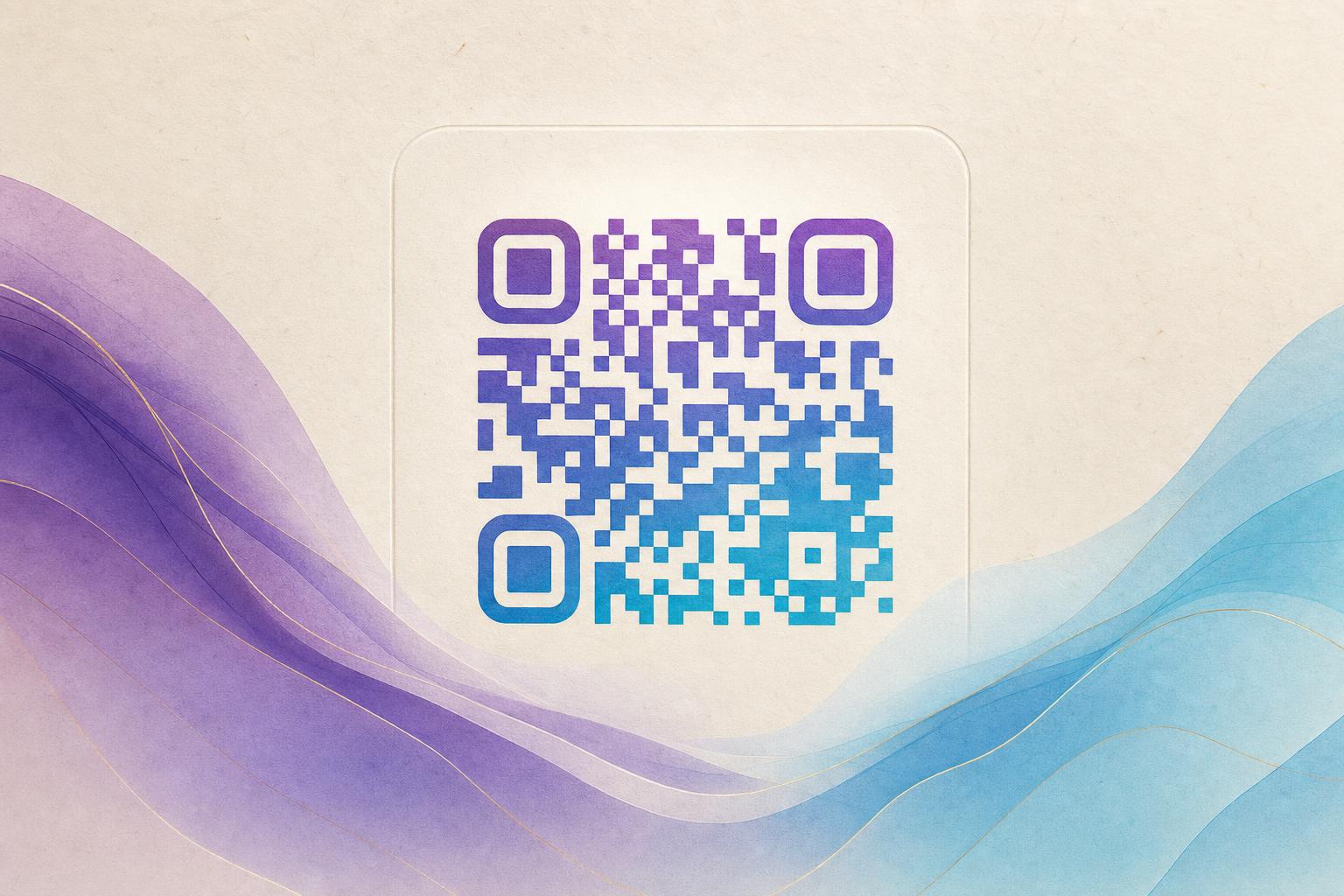
A dynamic QR code is a QR code that points to a short redirect link you control rather than to a fixed URL. Because the printed pattern never changes, you can edit the destination later, swap campaigns, and collect scan data without reprinting a single poster. If you have ever printed a code that led to a dead page, a dynamic QR code is the fix. Below is a practical workflow for building one, styling it, and keeping it useful for months.
Step 1: Decide what the code should do
Before you touch a QR code generator, write one sentence describing the scan outcome. Good examples:
- Open a membership signup page for a cafe loyalty program (membership QR).
- Send people to a product page with a discount code attached.
- Point to a menu, portfolio, or event schedule you update weekly.
If the destination will never change and you do not need scan counts, a static code is fine. Choose dynamic QR code when you want edits, QR analytics, or a custom short link that looks clean in print.
Step 2: Create the redirect first
The redirect is the engine of every live QR code. In a dynamic qr code tool, create a short link and attach your real destination to it. Then treat that short link as permanent. When the campaign ends, you edit the redirect target instead of generating a new image.
- Open the AI Art QR tool.
- Paste your destination URL and let the tool create the redirect entry.
- Copy the short link and test it on your phone before generating any artwork.
If you plan to run several campaigns, set up a custom QR domain so every link carries your brand instead of a generic host.
Step 3: Generate the code and test the scan
Generate the QR pattern at a high resolution. A print-ready file should be at least 1000 pixels wide for a small sticker and considerably larger for posters. Test three things immediately:
- The code opens the correct page on both iOS and Android.
- The redirect resolves within a second or two.
- The error-correction level is high enough to survive styling.
This last point matters. When you beautify QR code designs with art, logos, or gradients, you need extra error correction so scanners still read the pattern.
Step 4: Style it with AI art, a logo, or animation
This is where a plain code becomes a styled QR code that people actually want to scan. You have three practical routes.
Route A: AI artistic QR codes
Use an AI QR code generator to blend the pattern into a scene, texture, or illustration. The best results keep the three finder squares intact and let the artwork wrap around them. Prompt for a mood and a subject, not for "a QR code" — for example, a coffee cup on a wooden table for a cafe, or a mountain ridge at dusk for an outdoor brand. The output is an artistic QR code that works as both a functional scan target and a small piece of visual content.
If you want a poster rather than a standalone image, run the same idea through an AI poster workflow. An online poster maker lets you place the code, headline, and logo in one layout, which is far more effective than pasting a code onto a blank wall of white space.
Route B: Blend the code with a photo or logo
A QR code fused with a product photo or brand mark feels native to the design instead of bolted on. Keep the logo small and centered, and never cover the finder squares. A circular QR code generator is useful for labels, coasters, and badge designs where a square block looks out of place. Round codes still need quiet space around the edge — do not let background art crowd the ring.
Route C: Animated GIF QR codes
For screens, digital signage, and social posts, an animated code can hold attention longer than a static image. Animate the background or a decorative element, not the pattern itself. If the modules shift or flicker, scanners will struggle. Keep the code area stable across every frame and loop the animation smoothly.
Step 5: Match the code to the medium
Design decisions should follow where the code will live.
- Print: high contrast, generous size, matte finish to avoid glare.
- Screens: include a short instruction such as "Point your camera here" and keep the code on screen for at least five seconds.
- Packaging: test on a curved surface before you commit to a print run.
- Events: place the code at eye level and add a one-line reason to scan.
A campaign QR code that nobody understands will not get scanned, no matter how attractive the art is.
Step 6: Track, then edit instead of reprinting
Once the code is live, watch QR analytics: total scans, unique scanners, time of day, and device type. If a poster underperforms, the problem is usually placement or the call to action, not the pattern. Use the data to move the code, change the surrounding copy, or point the redirect somewhere new.
This is the real advantage of an editable QR code. A seasonal menu becomes a new menu with one edit. A sold-out product page becomes a waitlist page. A conference schedule updates hourly while the printed badge stays the same. Every change happens through scan to redirect, so your QR branding stays consistent across every printed asset.
Step 7: Keep a simple maintenance habit
- Audit every live redirect once a month and fix broken destinations.
- Label each short link by campaign so analytics stay readable.
- Archive old artwork but keep the redirect record active.
- Re-test scans after any edit to the destination page.
Treat your codes as infrastructure, not one-off graphics. A trackable QR code with a clean custom short link and a maintained redirect will keep working long after the original campaign has ended.
Start with the redirect, style second. A beautiful code that points nowhere is just decoration.
Ready to build one? Open the AI Art QR tool, create your redirect, and turn a plain dynamic QR code into a QR code people actually want to scan.