
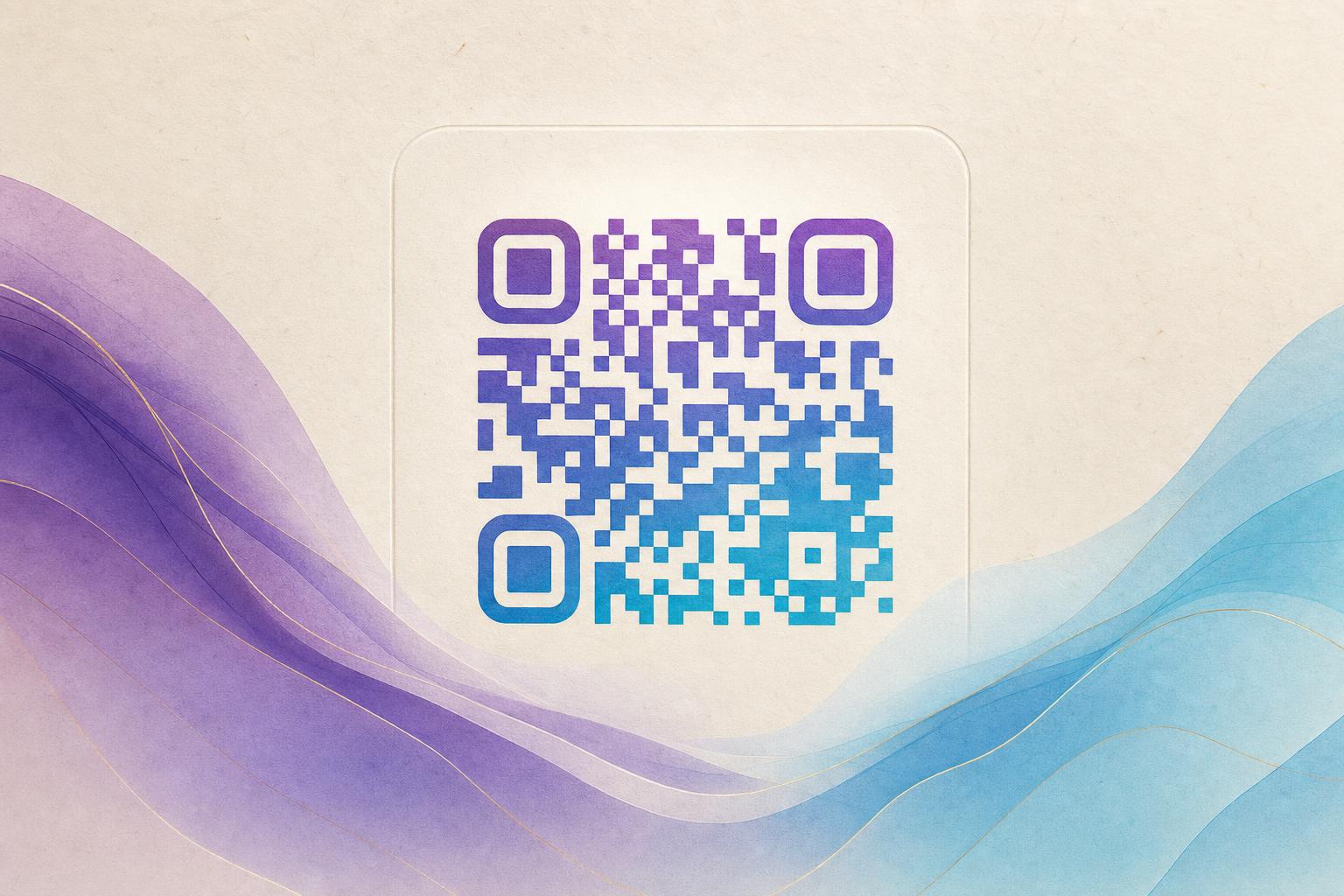
An ai art qr code generator takes a standard black-and-white code and rebuilds it inside a piece of artwork, so the modules become part of a scene, a photo, or a logo instead of sitting on top of it. The code still scans because the pattern keeps the contrast and structure a phone camera needs. The practical version of the task is simple: pick a destination link, feed it to the tool with a theme, adjust contrast and density until the code reads cleanly, then test it on real phones before you print or post it. Below is the full workflow using the AI art QR code generator.
Step 1: Decide what the code should do before you make it pretty
Artistic treatment is the last layer, not the first. A beautiful artistic QR code that points to a broken page is worse than a plain one that works. Before you open any qr code generator, write down three things:
- Destination: a landing page, menu, ticket page, membership signup, or product listing.
- Lifespan: a one-off print flyer can use a static code; anything you may need to change later should be a dynamic QR code so the destination stays editable.
- Placement: a poster viewed from two meters needs a different code size than a table tent viewed from arm's length.
If the destination might change, generate an editable QR code with a smart QR redirect and a custom short link. That way a campaign QR code printed on 5,000 flyers can be repointed without a reprint.
Step 2: Choose the right generator for your visual goal
Not every artistic treatment is the same job. Match the tool to the output you actually need:
Full illustration around the code
Use the ai art qr code generator when you want a painted or illustrated scene where the modules become texture, shadows, or pattern. This suits event posters, packaging, and social graphics.
Code blended into a photo or logo
If you already have brand assets, a fusion tool lets you merge the code into an existing image so the result reads as a styled QR code rather than a generic template. This is the fastest route to QR branding that matches an existing campaign.
Motion for screens
For stories, reels, and lobby displays, an animated version can hold attention longer. Keep the code area stable across frames so cameras lock on quickly.
Whatever you choose, the tool is only the QR design tool. The scan test in Step 5 is what protects you.
Step 3: Build the artwork with scan safety in mind
This is where most first attempts fail. An AI art QR image can look stunning on screen and still refuse to scan because the contrast is too soft or the pattern is too dense. Work through these settings in order:
- Keep the three corner markers intact. Those squares tell the camera where the code begins. Never let artwork cover or distort them.
- Protect contrast. Dark modules on a light field scan best. If your theme is dark, invert the artwork so the code area stays high-contrast.
- Raise error correction. Higher correction lets the code survive more artistic interference. Use it when you blend heavily, then reduce only if the design looks muddy.
- Control density. Short links produce fewer modules and scan more reliably. A custom short link is worth setting up before you design.
- Try a circular QR code or rounded modules if the theme is soft or organic; square modules suit industrial or tech visuals.
Generate two or three variations rather than one. Compare them at thumbnail size, because that is how most people will first see your AI QR code on a phone screen.
Step 4: Pair the code with the rest of the layout
An artistic code is usually part of a larger piece. If you are producing a poster, build the surrounding layout in the same session so the code is sized correctly relative to headlines and images. An online poster maker or poster generator keeps the composition consistent, and the result functions as an AI poster with a working code embedded rather than a code dropped on at the end.
Leave clear space around the code. A quiet margin of plain background on all four sides does more for scan speed than any other single change.
Step 5: Test on real devices, not just the preview
The preview inside a qr code generator free tool is a rendering, not a camera. Test properly:
- Scan from at least three phones, including one older model with a weaker camera.
- Test at the real viewing distance, in the real lighting, on the real material.
- Print a proof on the actual stock if the final piece is physical; glossy surfaces and dark paper change results.
- Scan from a screenshot and from a photo of a screen, since many people will encounter it that way.
If any test fails, increase contrast or shorten the link before you touch the artwork. Fixing the data is almost always faster than redesigning the image.
Step 6: Make it trackable so the design earns its keep
A trackable QR code turns a visual asset into a measurable channel. With QR analytics you can see scan volume by day, device type, and rough location, which tells you whether the poster, the packaging, or the table tent is doing the work. Use a live QR code with a custom QR domain so links look branded and stay under your control.
This matters most for recurring use cases. A membership QR on a card, a scan to redirect code on seasonal packaging, or a campaign QR code across a print run all benefit from being editable after launch. If a promotion ends early, repoint the code instead of pulping the print.
Step 7: Keep a small library of tested designs
Once you have a code that scans reliably, save the settings: theme, error correction level, module shape, margin, and link. Reusing a proven configuration beats starting from zero each time, and it keeps your QR branding consistent across campaigns. A shared QR code studio workspace helps when several people produce assets.
Rule of thumb: if a stranger cannot scan it in two seconds from a photo of your poster, the design is not finished.
Common mistakes to avoid
- Designing before shortening the link. Long URLs create dense codes that break under artistic treatment.
- Letting art cross the corner markers. The most common cause of total scan failure.
- Choosing beauty over contrast. Low-contrast themes look elegant and fail in daylight.
- Skipping print proofs. Screen tests do not predict ink on textured paper.
- Using a static code for a changing destination. You lose the ability to fix a mistake without a reprint.
Used well, an ai art qr code generator turns a utility into part of the creative work. Start with a short, trackable link, generate a few themed variations, tune contrast and error correction until the code reads cleanly, and test on real phones before anything goes to print. That sequence is what separates a striking AI QR code from an expensive design that nobody can scan.