
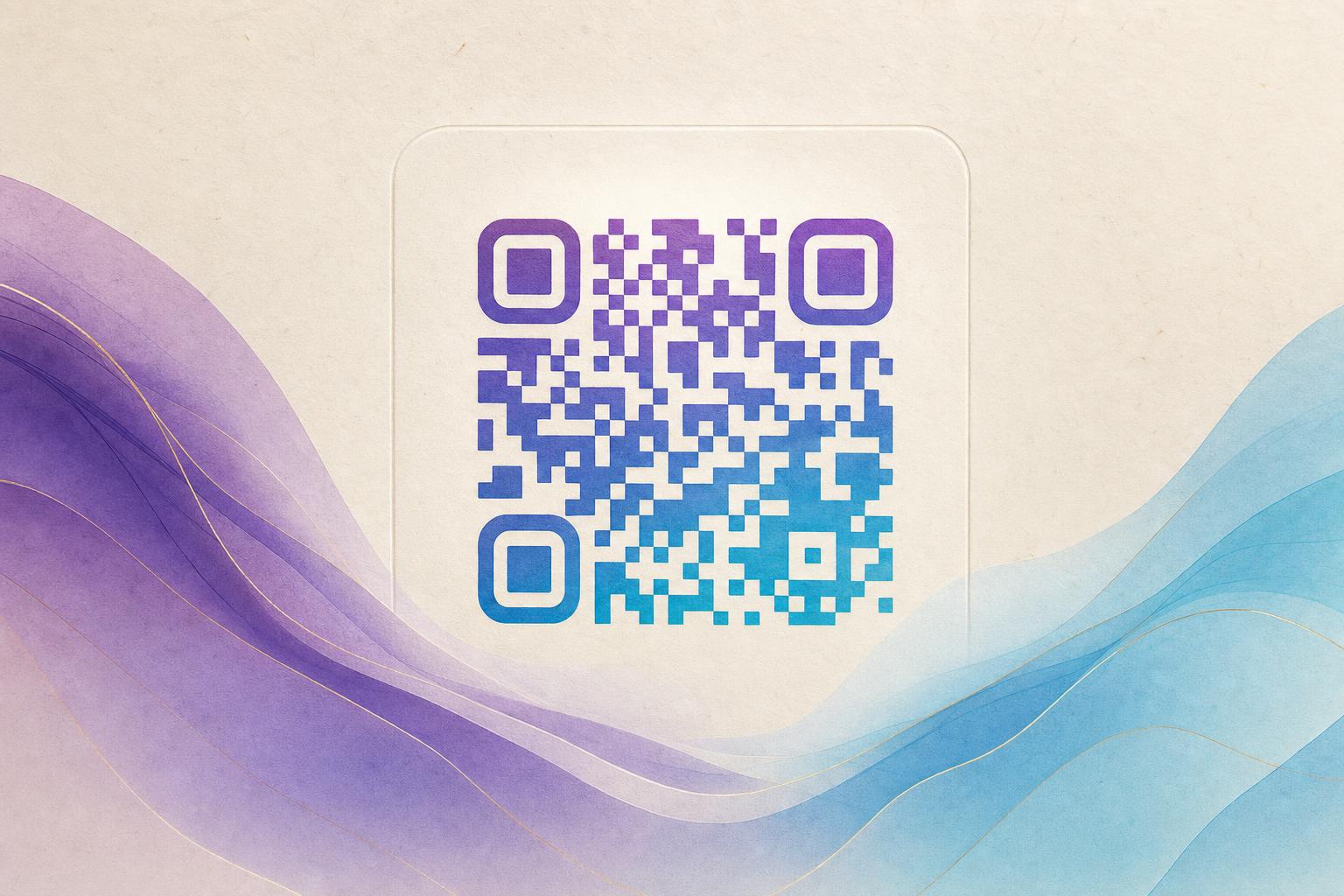
An artistic QR code is a scannable QR code whose modules, colors, and background have been redesigned so it looks like a piece of art rather than a utility graphic. The pattern still encodes the same link, but it is blended with a photo, illustration, logo, or theme so it fits a poster, packaging, or storefront. You can make one in a few minutes with an AI QR code generator: pick a destination link, upload or describe the artwork, tune the blend until the code stays readable, then download and test it. The steps below show exactly how to do that.
What makes an artistic QR code different
A standard code prioritizes contrast and simplicity. An artistic QR code keeps enough contrast for scanners while replacing the plain grid with styled elements. That usually means rounded or circular modules, a custom color palette, a logo in the center, and a background image that echoes the modules instead of fighting them.
The tradeoff is readability. Every design choice that makes the code prettier can also make it harder to scan. Good artistic QR codes are built with that tension in mind, which is why a dedicated QR design tool beats editing a static image by hand.
Step 1: Decide what the code should do
Before you open any generator, write down the destination and the job. A menu code, a campaign QR code, and a membership QR have different requirements.
- Destination URL: the page, file, or form the scan should open.
- Placement: print size, viewing distance, and surface (paper, glass, fabric, screen).
- Goal: a scan to redirect, a download, a signup, or a short video.
If the link may change later, use a dynamic QR code so you can update the destination without reprinting. An editable QR code also lets you swap artwork or fix a contrast problem after the first print run.
Step 2: Generate the base code
Start with a clean, high-contrast code at a large size. Most tools export SVG or high-resolution PNG, and both are better than a small JPG for print. Keep the error correction level high enough that a logo or image overlay will not break scanning. If you are unsure, generate the plain code first, test it, and only then move on to styling.
Step 3: Pick your art direction
There are three common approaches, and each suits a different use case.
Photo or logo fusion
Blend the code with a product photo, portrait, or brand mark. This works well for packaging and event badges. Use the QR Fusion tool to merge an image with the code and control how strongly the artwork shows through.
AI-generated art
Describe a scene, style, or mood and let an AI art QR generator build the visual. This is the fastest route to a themed artistic QR code for a poster or social post. The AI Art QR tool lets you prompt the artwork and adjust the blend so the code remains scannable.
Animated codes
For screens, an animated GIF QR code can carry motion, a logo reveal, or a subtle shimmer. Use it on websites, digital signage, and video end cards, not on printed flyers.
Step 4: Tune the blend until it scans
This is where most designs succeed or fail. Work through these checks in order:
- Contrast: dark modules on a light background scan best. If you invert colors for style, test carefully.
- Quiet zone: keep a clear margin around the code. Do not let artwork crowd the edges.
- Logo size: keep any center logo small, roughly under a fifth of the code area.
- Module shape: a circular QR code looks softer and more designed, but very small circular modules can blur when printed.
- Color palette: avoid low-contrast pairs like light gray on white or red on green.
Change one variable at a time and re-test after each change. If a design looks great but fails at small sizes, simplify the background before you abandon the concept.
Step 5: Test on real devices
Never ship an artistic QR code without testing it the way your audience will use it.
- Scan from at least three phones, including one older model.
- Test at the final print size and from the expected distance.
- Check in low light and at an angle.
- Confirm the landing page loads quickly on mobile.
If the code is going on a poster, print a proof and scan the proof, not just the screen.
Step 6: Add tracking and a smart destination
A beautiful code is only half the job. Use a trackable QR code so you can see scans by date, location, and device. A smart QR redirect lets you send mobile users to one page and desktop users to another, or rotate destinations between campaigns. Pair it with a custom short link or custom QR domain so the code looks clean and stays on brand.
QR analytics also tell you whether the design is working. If scans are low but traffic to the same page from other channels is normal, the code itself may be the problem.
Step 7: Apply QR branding consistently
Once you have a design that scans well, standardize it. Keep the same module style, corner shapes, and color rules across all codes so your QR branding feels intentional. Save a template in your QR code studio so every new campaign QR code starts from a proven layout rather than a blank canvas.
Common mistakes to avoid
- Overloading the code with dense artwork until the pattern is unreadable.
- Using a photo with busy detail directly behind the modules.
- Forgetting the quiet zone.
- Printing too small for the viewing distance.
- Skipping the test because the preview looked fine.
Where artistic QR codes work best
Use them where the code is part of the design: event posters, product packaging, business cards, restaurant tables, exhibition signage, and social graphics. For a quick internal label, a plain code is fine. For anything customer-facing, a styled QR code earns more scans because it looks like it belongs.
If you want a poster-ready result without design software, an online poster maker paired with an AI poster design workflow can place your finished code into a layout at the right size and contrast. The key is to treat the code as a design element from the start, not an afterthought pasted into a corner.
Design the code for the scan first, then make it beautiful. A stunning code nobody can read is just a picture.
Quick checklist before you publish
- Destination link is correct and mobile-friendly.
- Dynamic or editable setup if the link may change.
- High error correction and a clear quiet zone.
- Tested on multiple phones at final size.
- Tracking enabled for campaign codes.
- Design saved as a reusable template.
Follow those steps and your artistic QR code will do both jobs: it will look like part of the campaign and it will reliably send people where you want them to go.