
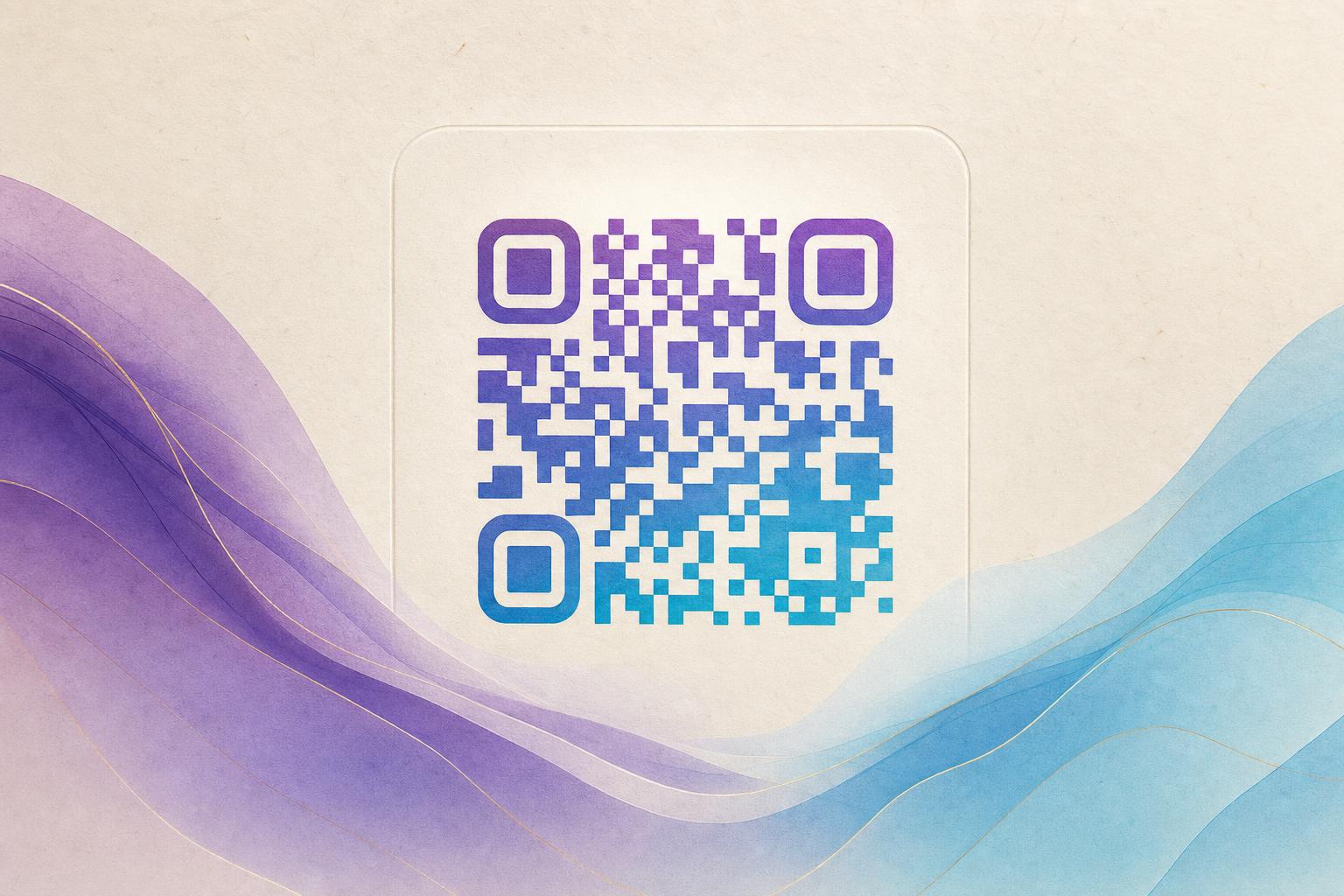
A circular QR code is a QR code that uses rounded modules and a circular overall silhouette instead of the traditional square grid. It still encodes the same data and scans with standard phone cameras, as long as the three corner finder patterns and sufficient contrast are preserved. The easiest way to make one is with an AI art QR generator that blends your link with a circular design, then test and fine-tune the result before you print or publish it.
Why use a circular QR code?
Round QR codes look more organic and fit naturally into logos, badges, product labels, and social media avatars. They are a form of QR branding that turns a utilitarian scan into a design element. When you beautify QR code shapes this way, you can keep the code recognizable while making it feel intentional rather than pasted on. A circular design also works well with AI hidden text and hidden text art, where the code blends into an illustration or pattern.
Step-by-step: create a circular QR code
1. Choose the right tool
Use a dedicated AI art QR tool that supports circular or rounded module styles. For this tutorial, open the AI Art QR Code Generator. It lets you generate an artistic QR code with a circular theme and adjust the style before exporting.
2. Enter your destination URL
Paste the link you want people to reach. For marketing campaigns, use a dynamic QR code or trackable QR code so you can change the destination later without reprinting. A custom short link or custom QR domain also keeps the encoded data compact, which helps the code stay clean when styled.
3. Pick a circular style
Select a round or rounded module shape and, if available, a circular frame. Many generators offer presets for dots, rounded squares, and circular finder patterns. Keep the three finder patterns (the large squares in the corners) clearly visible, even if they are rounded. This is the single most important scannability rule for a circular QR code.
4. Blend with art or a logo
If you want a QR code blended with a photo or logo, upload a simple image with strong contrast. The tool can merge the code into the artwork while keeping the data modules readable. Avoid busy backgrounds behind the modules, and do not cover the finder patterns with artwork. A styled QR code works best when the art supports the code rather than hiding it.
5. Set contrast and error correction
Use dark modules on a light background, or the reverse only if you test it. Higher error correction (level H) gives the scanner more room to recover from artistic changes, but it also makes the code denser. For circular designs, level Q or H is usually a good balance. If the generator offers a contrast slider, keep the module-to-background contrast strong.
6. Test before you publish
Scan the code with at least two phones and a few different QR reader apps. Test from the distance and angle people will actually use. If it fails, simplify the art, increase contrast, or reduce the amount of styling. A live QR code that you can edit later is safer for print campaigns because you can fix issues without reprinting.
7. Export and place it
Download a high-resolution PNG or SVG. For print, SVG or a large PNG is better. Place the circular code where it has quiet space around it, and include a short call to action such as “Scan to learn more.” If you are building a campaign QR code, pair it with a landing page that matches the design.
Common mistakes to avoid
- Covering the finder patterns with art or a logo.
- Using low contrast between modules and background.
- Making the code too small for the scan distance.
- Forgetting to test on both iOS and Android devices.
- Using a static code for a long campaign where you may need to change the link.
When to use a circular QR code
Circular codes are great for QR code marketing on packaging, business cards, menus, event badges, and social profiles. They also work well for a membership QR or a scan to redirect flow where the code is part of the visual identity. If you need animation, consider an animated GIF QR instead, but keep the same scannability rules.
Make it editable and trackable
Use an editable QR code or dynamic QR code so you can update the destination, run QR analytics, and set up a smart QR redirect later. This turns a one-off design into a measurable asset. Aiqrdream’s QR code studio and QR design tool support these workflows, and you can beautify QR code styles without losing the scan.
Ready to make yours? Start with the AI Art QR Code Generator and create a circular QR code that fits your brand.